St. Martin's Day: Why Do We Celebrate It?

Why do we celebrate St. Martin's Day, and who was St. Martin? What's the story behind the traditional St. Martin's goose? Here's an introduction to the legend of St. Martin and the traditions surrounding this special day.

Published4 min read

Lanterns, Stories and Quality Time with Your Host Children

When colourful lanterns light up the streets in November, a special experience awaits you and your host children: St. Martin's Day (Martinstag)!

As an au pair, it's a wonderful opportunity to discover a German tradition, sing songs with the children and practise your German along the way.

St. Martin's Day is celebrated on 11 November. Many lantern parades take place on this day or in the days just before or after. But who was St. Martin, and what do geese have to do with him?

The Story of St. Martin – Simply Explained

Martin lived a very long time ago and was a soldier. The most famous legend about him tells the story of something that happened on a cold winter's day.

Martin was riding his horse, wrapped in his warm cloak. As he approached the gates of a town, he noticed a poor man who was freezing because he had no warm clothes.

Martin stopped. He wanted to help, but he had nothing to give the man – except his own cloak.

So he took his sword and cut his cloak into two pieces. He gave one half to the freezing man and kept the other half for himself.

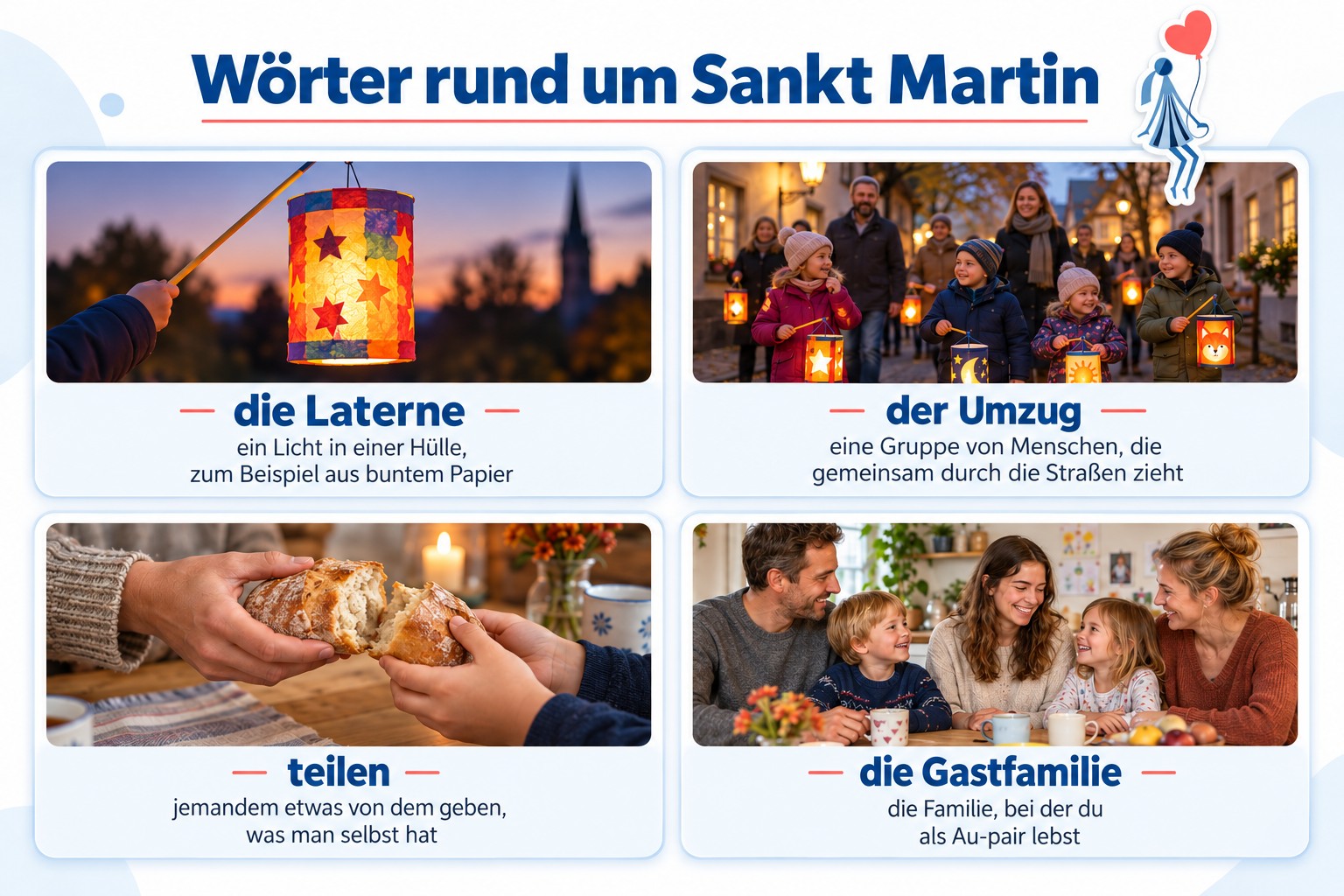
Martin later became the Bishop of Tours, a town in what is now France. To this day, his story reminds us how important it is to help others and share what we have.

Learn more about Martin of Tours (German)

A question for your host children: "What could you share with someone today?"

Perhaps they'll think of a toy, a piece of cake or simply spending time with someone.

How You Can Celebrate St. Martin's Day

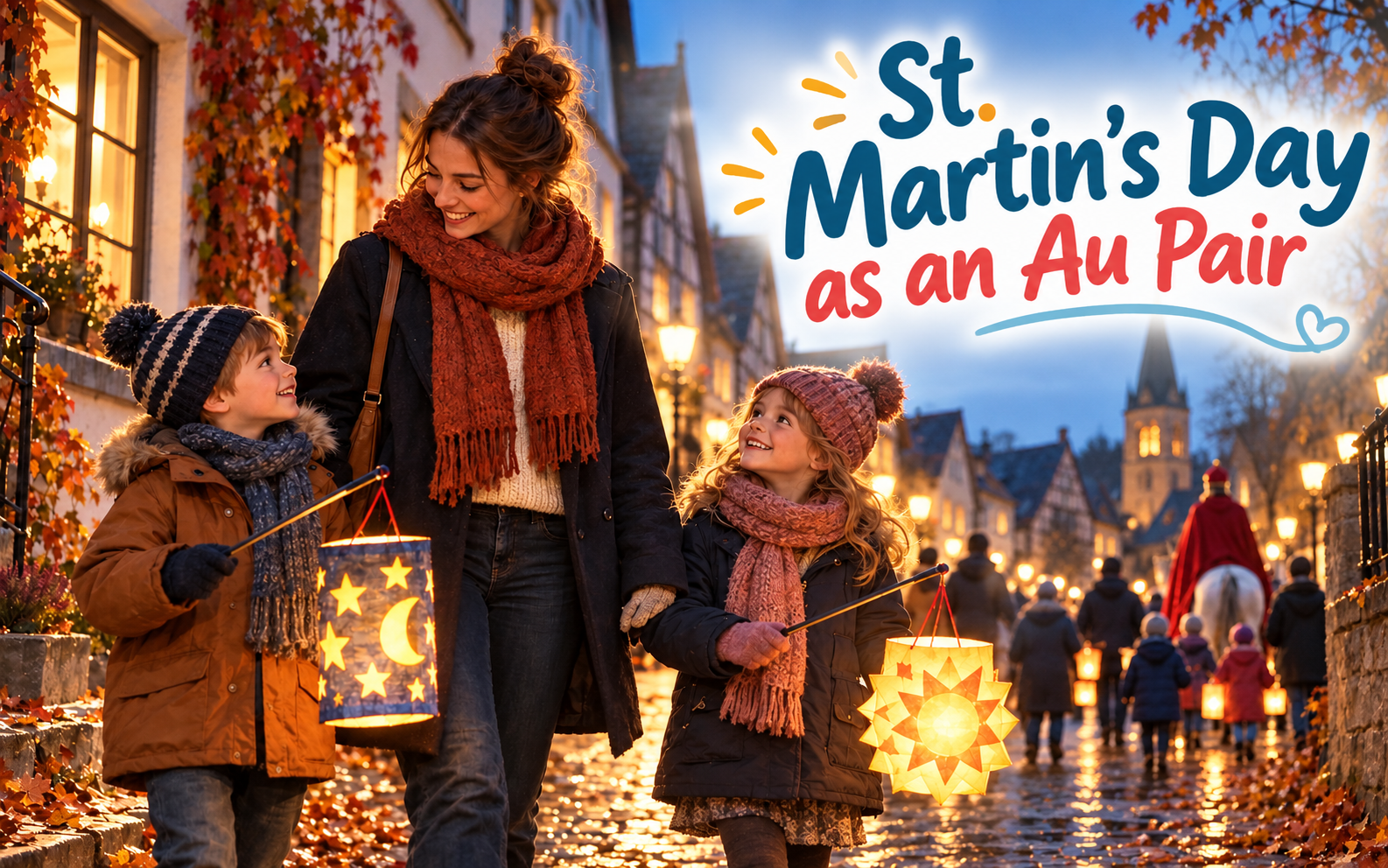
During a St. Martin's lantern parade (Martinsumzug), children walk through the streets carrying colourful lanterns and singing traditional songs.

Sometimes, a rider dressed as St. Martin leads the parade on horseback, and the famous scene of Martin sharing his cloak is acted out.

The exact traditions vary depending on the town or region.

Learn more about St. Martin's Day traditions (German)

Ask your host family how they usually celebrate St. Martin's Day and whether the children's kindergarten or school is organising a lantern parade. That way, you can plan the evening together and decide what you'll be helping with.

Here are a few ways to get involved:

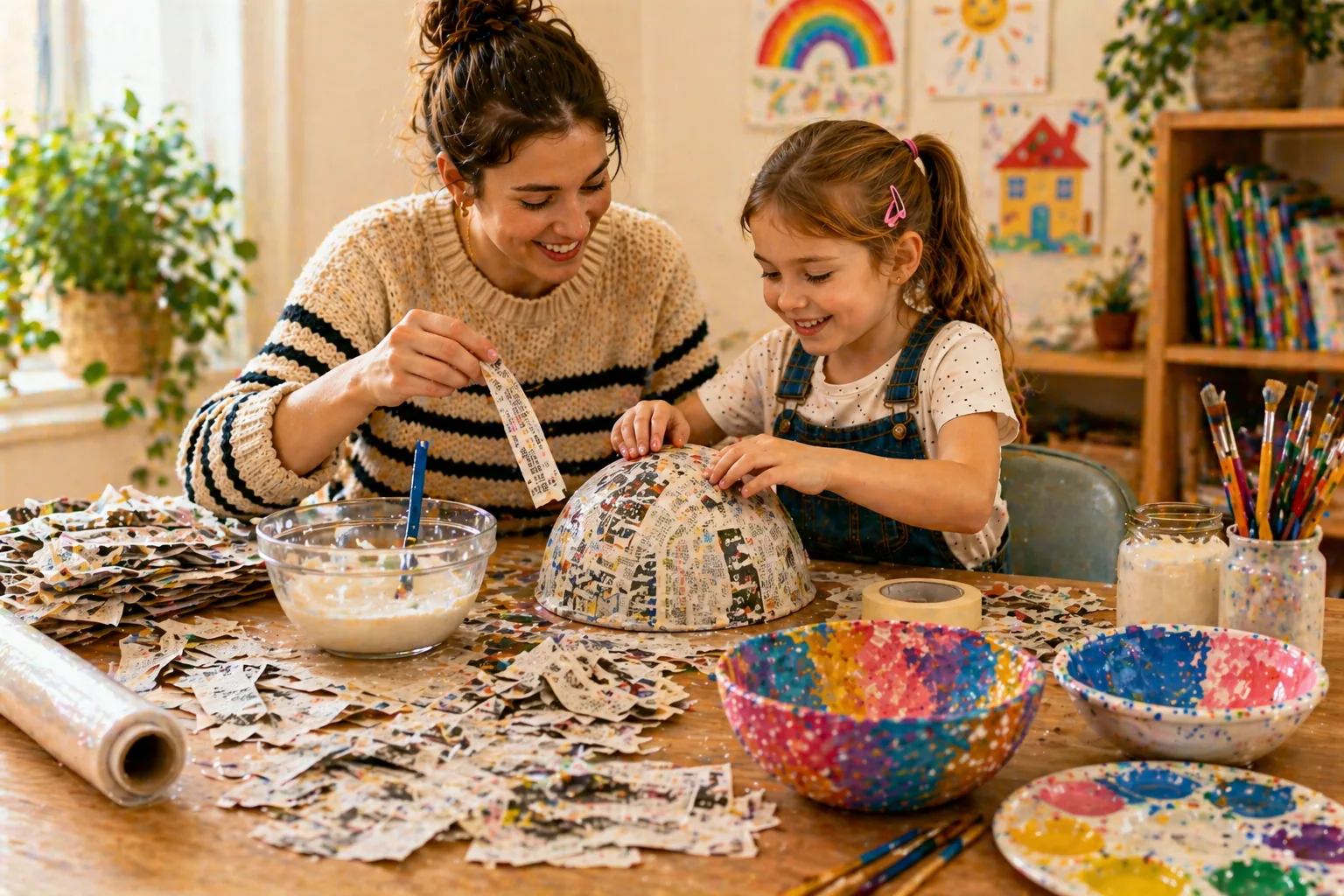
  • Make a lantern together: Let the children show you their favourite colours and designs. Maybe you could even include a creative idea from your home country.

  • Learn a traditional song: Your host children might already know a German lantern song and can teach it to you. Don't worry if you don't understand every word straight away!

  • Get ready for the evening: Prepare warm clothes, check that the lanterns have working battery-operated lights, and talk to the children about staying together during the parade.

Why Are Geese Associated with St. Martin?

Another popular legend tells us that Martin didn't actually want to become a bishop.

According to the story, he tried to hide in a goose shed to avoid being chosen. Unfortunately for Martin, the geese began honking so loudly that the people looking for him discovered his hiding place!

That's how geese became part of the legend of St. Martin.

But the tradition of eating roast goose around St. Martin's Day also has historical roots. In the past, farmers often had to pay certain taxes or rents in the form of livestock, and the date also fell around the beginning of the traditional fasting period before Christmas.

Learn more about the St. Martin's goose (Martinsgans) (German)

For a cosy afternoon with your host children, why not bake some sweet goose-shaped biscuits together?

Measuring the ingredients, cutting out the shapes and sharing the finished treats are lovely opportunities to talk about St. Martin's story again – and to practise a little German at the same time.

ESC to closeBrowse all topics →